Why Financial Freedom Is Bigger Than Your Bank Balance
Financial Freedom, Cash Flow, Stewardship, Legacy, BDE Wealth
Financial Freedom Is Not a Number: Redefining Wealth for Professionals
If you’ve ever told yourself, “Once I hit that income level or that net worth, then I’ll finally feel financially free,” this article is for you. At BDE Wealth, we see a different reality play out over and over: professionals earning impressive incomes, owning beautiful homes, driving great cars, yet quietly feeling financially trapped, stressed, and unsure what “freedom” actually looks like for them.
The common story we’re sold is simple: make more money, save more money, invest more money, and eventually you’ll cross a magical line called “Financial Freedom.” But that story leaves out something crucial: freedom is not a single dollar amount. It’s a relationship between your money, your obligations, your time, and your values. It’s about stewardship, systems, and sovereignty, not just accumulation.
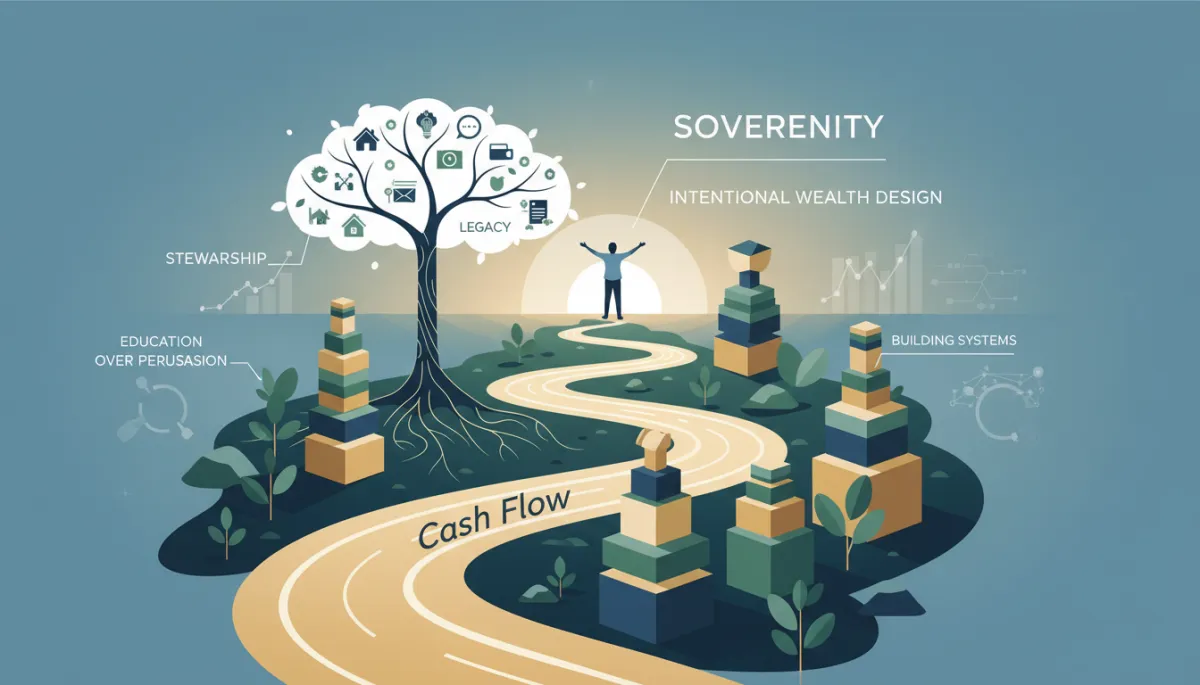
In this conversation, we’ll explore why high-income professionals still feel stuck, what truly separates income, wealth, cash flow, and freedom, and how to design a life where your money serves your purpose instead of the other way around. Along the way, you’ll see how the BDE Wealth philosophy Education over persuasion, Stewardship before accumulation, Structure before strategy, Systems over shortcuts, Legacy over lifestyle can reshape how you think about your entire financial life.
Why High-Income Professionals Still Feel Financially Trapped
On paper, many professionals “should” feel free. The paycheck is strong, the LinkedIn profile looks impressive, and the lifestyle reflects years of hard work. Yet behind closed doors, there’s a different reality: anxiety about cash flow, pressure to maintain appearances, and the constant sense that one wrong move a layoff, a health issue, a business downturn could unravel everything that’s been built.
Why does this happen? One simple reason: income alone does not create freedom. If every raise is matched (or exceeded) by new obligations bigger mortgage, more subscriptions, higher private school tuition, nicer vacations—then your lifestyle becomes a cage built out of monthly payments. You’re not financially free; you’re financially committed, often for decades into the future.
Think of a high-earning executive with a $400,000 salary, two luxury car payments, a large home, private schools, and a long list of recurring costs. From the outside, it looks like success. Internally, every month feels like a treadmill: the income is high, but so is the burn rate. If that income stops, even for a short period, the entire structure wobbles. That is not freedom; that is a sophisticated form of dependence.
Reflect for a moment: “If my primary income source disappeared for six months, would my current lifestyle feel like a blessing or a burden?” That question alone can reveal whether you are moving toward Financial Freedom or simply toward a more expensive version of the same trap.
Income, Wealth, Cash Flow, and Freedom: Four Different Conversations
One reason so many smart people feel confused about money is that we mix up four very different ideas: income, wealth, cash flow, and freedom. When these words blur together, it’s easy to chase the wrong target. Let’s separate them in simple terms.
Income: The Flow In
Income is what you earn from your salary, business profits, bonuses, and side income. It’s the speed at which money flows into your life. High income is helpful, but by itself it doesn’t guarantee stability or peace. It just means the inflow is strong…for now. Income is about today’s earnings, not tomorrow’s security or freedom.
Wealth: What You Actually Own
Wealth is what you own minus what you owe: your assets minus your liabilities. This includes cash, investments, equity in businesses or real estate, and other resources that have lasting value. If income is the speed of money, wealth is the reservoir. You can have high income and low wealth if every dollar leaves as fast as it arrives. You can also have modest income and meaningful wealth if you’ve stewarded your resources intentionally over time.
Cash Flow: The Rhythm of Your Financial Life
Cash flow is the ongoing relationship between what comes in and what goes out month after month. You can think of it as your financial heartbeat. Positive cash flow (more coming in than going out) creates margin, options, and breathing room. Negative cash flow (more going out than coming in) creates pressure, anxiety, and dependence, no matter how high your income is on paper. This is why cash flow is at the center of BDE Wealth’s approach to Financial Freedom; it’s the daily reality you actually live in.
Freedom: The Ability to Choose
Financial Freedom is not just a big bank account. It’s the ability to choose how you spend your time, energy, and attention, with money not being the primary decision-maker. Freedom shows up in questions like:
Can I say “no” to work that violates my values?
Can I take time off to care for family without financial panic?
Can I invest in opportunities because they align with my purpose, not just my paycheck?
Freedom is the intersection of healthy cash flow, aligned obligations, and intentional design. It’s less about “How much do I have?” and more about “How many real options do I have?”
Freedom Comes from Fewer Obligations, Not Just Bigger Numbers
If Financial Freedom isn’t a single number, what is it built on? One of the most counterintuitive truths we teach at BDE Wealth is this: freedom is created more by reducing obligations than by endlessly increasing lifestyle.
Obligations are the promises your money has already made on your behalf: mortgages, leases, loans, subscriptions, long-term contracts, and even unspoken expectations you’ve set with your family or peers. The more fixed obligations you carry, the less room you have to pivot, pause, or pursue something new. In other words, obligations quietly drain your sovereignty, even while your income rises.
Imagine two professionals:
Alex earns $350,000 a year with $18,000 in monthly fixed obligations.
Jordan earns $180,000 a year with $5,000 in monthly fixed obligations.
On paper, Alex “wins.” But if both lost their primary income tomorrow, who would have more time, flexibility, and emotional margin to reinvent their work life? Jordan, with far fewer obligations, may have more practical freedom despite a lower income. That’s the power of designing your financial life around sovereignty instead of status.
Reflect: “If I reduced my fixed monthly obligations by 25–30%, how would my life feel different?” You might not need a raise to feel freer. You might need fewer promises that your money has to keep every month.
Lifestyle Inflation: The Quiet Thief of Financial Independence
Lifestyle upgrades are not “bad.” Enjoying the fruit of your labor is part of a healthy financial life. The danger is not in improvement; it’s in automatic, unexamined lifestyle inflation, the pattern where every income increase is immediately matched by higher spending and new obligations, often justified as “normal” or “deserved.”
Lifestyle inflation is like a slow leak in your financial freedom bucket. It rarely feels extreme in the moment: a slightly nicer car, a marginally bigger house, upgraded vacations, more frequent dining out, a few more services and subscriptions. Each decision seems reasonable. But over five to ten years, those “small” choices can easily consume the entire gap between your old income and your new income, leaving your cash flow just as tight as before, only at a higher level of spending.
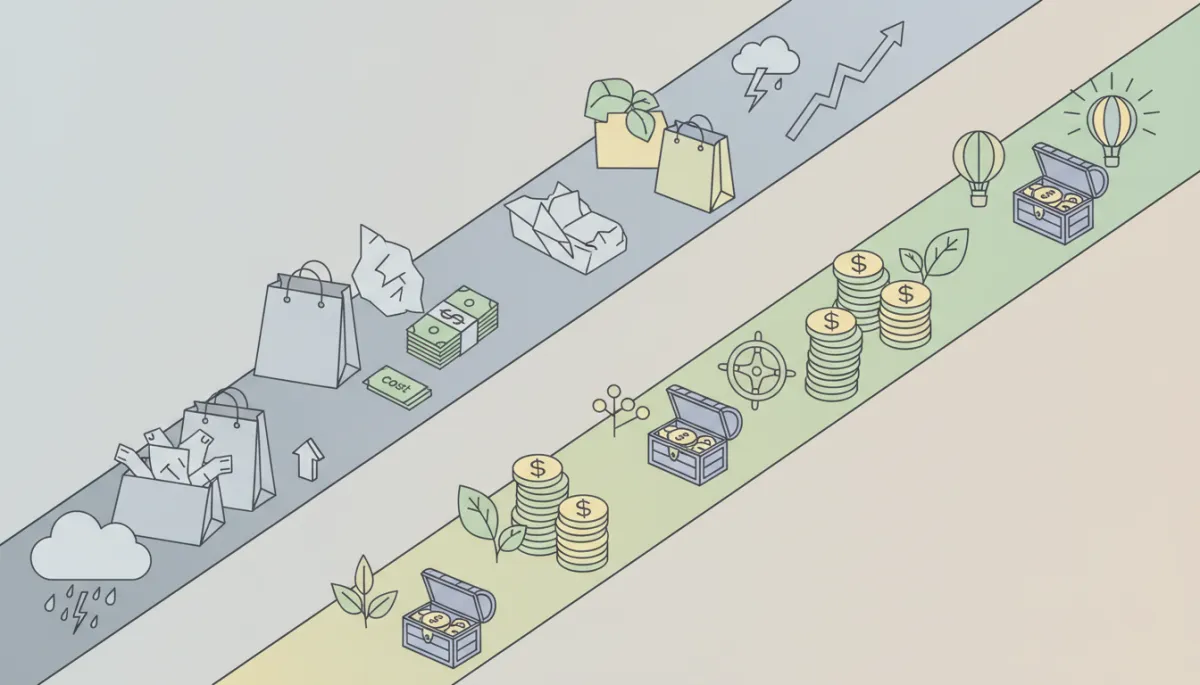
-toned of two parallel paths, one showing increasing lifestyle expenses with stress icons, the...
Choosing intentional design over lifestyle inflation turns income growth into lasting freedom.
A simple analogy: imagine your income as the speed of a car and your lifestyle as the weight it’s carrying. Every time you upgrade your lifestyle without intention, you’re adding more weight to the car. You can keep pressing the gas pedal (asking for raises, working longer hours, chasing bigger deals), but if the weight keeps increasing, it takes more and more energy to maintain your current speed. That’s why so many high performers feel exhausted: they’re carrying a lifestyle that demands constant acceleration just to stay upright.
💡 Reflective Question: “Which of my current lifestyle expenses truly add meaning, connection, or joy—and which are just habits, expectations, or attempts to ‘keep up’?”
Building Systems That Create Options Instead of Stress
One of BDE Wealth’s core beliefs is Systems over shortcuts. Most people look for the next hot investment, the perfect budgeting app, or the “one move” that will change everything. But real Financial Freedom is rarely the result of a single decision; it’s the product of systems that quietly work for you over time, regardless of how busy life becomes.
A system is simply a repeatable structure that turns your intentions into consistent actions. Instead of relying on willpower or reacting to every financial surprise, you create a design that supports the life you actually want. Here are a few examples of systems that create options instead of stress:
Cash Flow Allocation System: A simple, automated structure where each paycheck is divided into key buckets essentials, giving, investing, reserves, and flexible spending before you ever “feel” it in your main account. This protects your future from your impulses and ensures that every month moves you closer to freedom, not just further into lifestyle drift.
Debt and Obligation Review System: A quarterly review where you list every recurring payment and ask, “Does this still serve our vision?” You intentionally eliminate, renegotiate, or restructure obligations that no longer align with your priorities, gradually freeing cash flow and mental space.
Opportunity Fund System: A dedicated account where a portion of your cash flow is reserved not for emergencies, but for opportunity investments, business ideas, and strategic moves. This system turns your money into a tool for sovereignty rather than just a safety net for fear.
Systems don’t have to be complex. In fact, the best ones are simple enough to run even in your busiest seasons. The key is that they reflect the BDE Wealth sequence: Structure before strategy. Before you chase the next strategy, new investment, tax play, or side business, ask: “Do I have a clear structure that supports my decisions?” If not, strategy will add complexity, not freedom.
Financial Freedom Begins Long Before Retirement
Many professionals still carry an old script: “Work hard, save diligently, retire at 65, and then finally enjoy life.” The problem? This script delays freedom to a future date that is neither guaranteed nor aligned with how most people actually want to live. It also treats Financial Freedom as a finish line instead of a way of living along the journey.
At BDE Wealth, we view Financial Freedom as something you begin to experience in stages, long before retirement. You don’t have to wait until you never work again. Instead, you gradually shift from:
Working because you must work because you choose.
Saying “yes” out of fear to saying “no” from conviction.
Maximizing income at any cost to aligning work with your purpose, health, and relationships.
Freedom starts the moment you begin designing your money around your values instead of your fears. That might look like:
Creating enough margin to reduce your hours or shift into a more meaningful role, even if it pays slightly less.
Designing your cash flow so you can take a sabbatical, launch a business, or invest more time with your family.
Building multiple streams of cash flow so your identity and security aren’t tied to a single employer or client.
Reflective Question: “If I were already financially free, what would I change about how I spend my time in the next 12 months—and what small step toward that change could I take now?”
Stewardship: The Foundation of Choices Money Alone Cannot Buy
Underneath every concept we’ve discussed cash flow, obligations, systems, and freedom is one core idea: stewardship. At BDE Wealth, we place Stewardship before accumulation because how you handle what you have now shapes the kind of choices you’ll have later, regardless of how much you eventually earn or own.
Stewardship means recognizing that wealth is more than money. It includes your time, relationships, skills, health, character, and influence. When you approach your finances as a steward rather than a consumer, you start asking different questions:
“How can I manage this income in a way that supports my values and my family’s future?”
“What structures do I need to protect what matters most if life changes suddenly?”
“How can my financial decisions today increase, not limit, my options five, ten, or twenty years from now?”
When you practice stewardship, you gain access to choices that money alone cannot buy:
The choice to walk away from toxic work without financial panic.
The choice to be present with family during critical life moments instead of being chained to obligations.
The choice to give generously, mentor others, or invest in causes you care about without compromising your own stability.
This is where Legacy over lifestyle becomes more than a slogan. It’s a daily decision to prioritize what will matter ten years from now over what looks impressive this weekend. Stewardship is the bridge between today’s cash flow choices and tomorrow’s legacy impact.
Practical Action Steps: Designing Your Own Version of Financial Freedom
Concepts are helpful, but transformation happens when you translate ideas into action. Here are practical steps you can take, rooted in the BDE Wealth philosophy, to start designing your own version of Financial Freedom, one built on stewardship, sovereignty, and intentional wealth design.
1. Define Freedom Beyond a Number
Set aside the idea of “I’ll be free when I have X dollars.” Instead, write down answers to these questions:
“What would a financially free week look like for me and my family?”
“What decisions would I make differently if money weren’t the main driver?”
“Which obligations feel the heaviest right now and why?”
This exercise shifts freedom from a distant retirement number to a present-day design challenge you can begin addressing now.
2. Map Your Current Cash Flow with Honesty
Instead of a vague sense that “money comes in and goes out,” create a simple, honest map of your cash flow:
List your total monthly income (after taxes).
List all fixed obligations: housing, debt payments, insurance, tuition, subscriptions.
Estimate variable spending: food, travel, entertainment, giving, miscellaneous.
Then ask: “How much true margin do I have each month?” If the answer is “not much,” your next step is not another complex investment strategy—it’s freeing cash flow by reducing obligations and lifestyle inflation. Structure before strategy.
3. Intentionally Reduce One Major Obligation
Choose one significant obligation that feels heavy and explore how you might reduce or eliminate it over the next 12–24 months. That might mean:
Paying off a specific debt faster, then redirecting that payment to savings or investing.
Downsizing or right-sizing housing to better match your long-term vision and cash flow goals.
Canceling or renegotiating recurring expenses that no longer align with your priorities.
Each obligation you remove is like removing a brick from the wall between you and your options. Freedom grows with every commitment you release that doesn’t serve your purpose.
4. Build a Simple Cash Flow System
Design a basic system for your monthly cash flow that reflects stewardship and intentional design. For example, you might allocate:
50–60% to essentials and obligations
10–20% of giving and generosity
10–20% to investing and long-term wealth building
10–20% for flexible enjoyment and experiences
The exact percentages will vary, but the principle remains: create a repeatable structure that turns your intentions into automatic actions. Over time, this system becomes a quiet engine for Financial Freedom.
5. Start Thinking in Terms of Legacy, Not Just Lifestyle
Finally, zoom out. Ask yourself: “What story do I want my financial life to tell my children, my community, or the people I lead?” That’s your legacy. Legacy is not just what you leave behind; it’s what you live out in front of others right now: how you handle pressure, how you give, how you prioritize what matters most.
Legacy-minded professionals design their finances so they can model wisdom, generosity, and courage, not just consumption. They pursue Education over persuasion, seeking to understand money, taxes, risk, and business structures so they can make informed decisions and guide others with clarity.
Bringing It All Together: Freedom, Stewardship, and Sovereignty
Financial Freedom is not a single number, a magic net worth, or a perfectly timed retirement date. It’s the result of thousands of small, intentional choices that align your cash flow, obligations, systems, and values over time. It’s the quiet confidence that comes from stewardship, not from status. It’s the sovereignty to design a life where money is a tool, not a master.
When you embrace the BDE Wealth philosophy—Education over persuasion, Stewardship before accumulation, Structure before strategy, Systems over shortcuts, Legacy over lifestyle you stop chasing someone else’s version of success. Instead, you begin crafting your own definition of Financial Freedom, one that honors your purpose, protects your family, and extends impact beyond your lifetime.
Final Reflection: “If Financial Freedom is not a number, but a design, what is one decision I can make this week that moves my design closer to stewardship, sovereignty, and legacy?”
You don’t have to figure this out alone. BDE Wealth exists to help individuals, families, business owners, and legacy-minded professionals move from confusion to clarity. Through educational resources, frameworks, and experiences, we help you understand money, taxes, risk, business structures, and long-term wealth design so you can make informed decisions that support the life—and legacy you’re called to build.
If you’re ready to take the next step in your Financial Freedom journey, consider scheduling a Legacy System Audit™ or exploring our Sovereignty Circle™ and other educational programs. Not as a quick fix or a shortcut, but as a deeper commitment to stewardship, intentional design, and long-term impact. Your future self and the generations watching you will be grateful you chose freedom over lifestyle, systems over shortcuts, and legacy over trends.