True Wealth Begins with Ownership of Your Thinking
Wealth, Mindset, Financial Stewardship
True Wealth Begins with Ownership of Your Thinking
Before wealth shows up in a bank account, it’s born in how you think. Your thoughts shape your decisions, your habits, your relationships, and ultimately your financial reality. When you learn to own your thinking, you stop drifting and start designing your life and money on purpose.
Why Lasting Wealth Is Created by Intentional Thinking
Many people chase higher income, new investments, or the “next big opportunity,” but skip the one thing that drives it all: how they think. Lasting wealth is not an accident. It is the result of intentional thinking repeated over time, translated into wise choices and consistent action.
Think about it this way: two people can earn the same income for ten years and end up in completely different places. One has growing savings, strong cash flow, and options. The other feels stuck, stressed, and unsure where the money went. The difference is not the paycheck; it’s the pattern of thinking behind every decision they made with that paycheck. One person was intentional. The other was reactive.
At BDE Wealth, we see wealth as something you design, not something you stumble into. That design starts in your mind: the questions you ask, the stories you believe about money, and the standards you set for yourself. When you begin to ask, “Is this choice moving me toward stewardship, sovereignty, and legacy?” your entire financial life starts to shift.
💡 Simple thought shift: From “Can I afford this payment?” to “Does this decision support my long-term freedom and purpose?”
Financial Stewardship Begins with Personal Responsibility, Wisdom, and Discipline
Stewardship is the idea that you are a caretaker of everything in your life—your money, time, relationships, skills, and opportunities. You may not control everything that comes your way, but you are responsible for how you respond. That’s where true financial stewardship starts: with personal responsibility, wisdom, and disciplined decision-making.
Personal responsibility says, “My results are connected to my choices. I can learn, adjust, and improve.” It refuses to blame the market, the news, or other people for every outcome. It looks honestly at spending, debt, and missed opportunities without shame—but with a commitment to grow.
Wisdom is more than information. It’s the ability to apply what you know in real life. You might know you “should” save, invest, or track your cash flow. Wisdom asks, “How do I do this in a way that fits my life, my values, and my long-term vision?”
Discipline is the bridge between intention and results. It’s choosing to say no to what doesn’t serve your future so you can say yes to what does. Discipline shows up in small, repeatable actions: reviewing your numbers, paying yourself first, avoiding impulse decisions, and sticking to structures that support you.
When you combine responsibility, wisdom, and discipline, you move from reacting to money to stewarding it. You stop asking, “What can I get right now?” and start asking, “How can I take care of what I’ve been given so it grows and serves more people over time?”
📌 Key Takeaway: Income is a tool. Stewardship is a posture. Without stewardship, more income often just leads to more chaos.
Money Simply Amplifies Your Existing Habits, Beliefs, and Systems
There’s a common belief that “more money will fix my problems.” In reality, money is more like a megaphone. It doesn’t change your core habits or beliefs—it amplifies them. If your current system is disorganized, more money just creates bigger, more expensive problems. If your current system is intentional and structured, more money expands your impact and options.
Imagine someone who spends every dollar as soon as it hits their account. If their income doubles, what usually happens? Their spending doubles. The car gets bigger, the house gets larger, the trips get fancier—but the stress often stays the same, or even increases. The underlying pattern didn’t change; it just got louder and more visible.
Now picture someone who has built simple systems: automatic saving, clear boundaries on debt, a plan for giving, and a focus on assets that produce cash flow. When their income grows, those systems catch the new money and direct it in healthy ways. Their generosity grows. Their buffer grows. Their options grow. The money is amplifying stewardship, not scarcity or impulse.
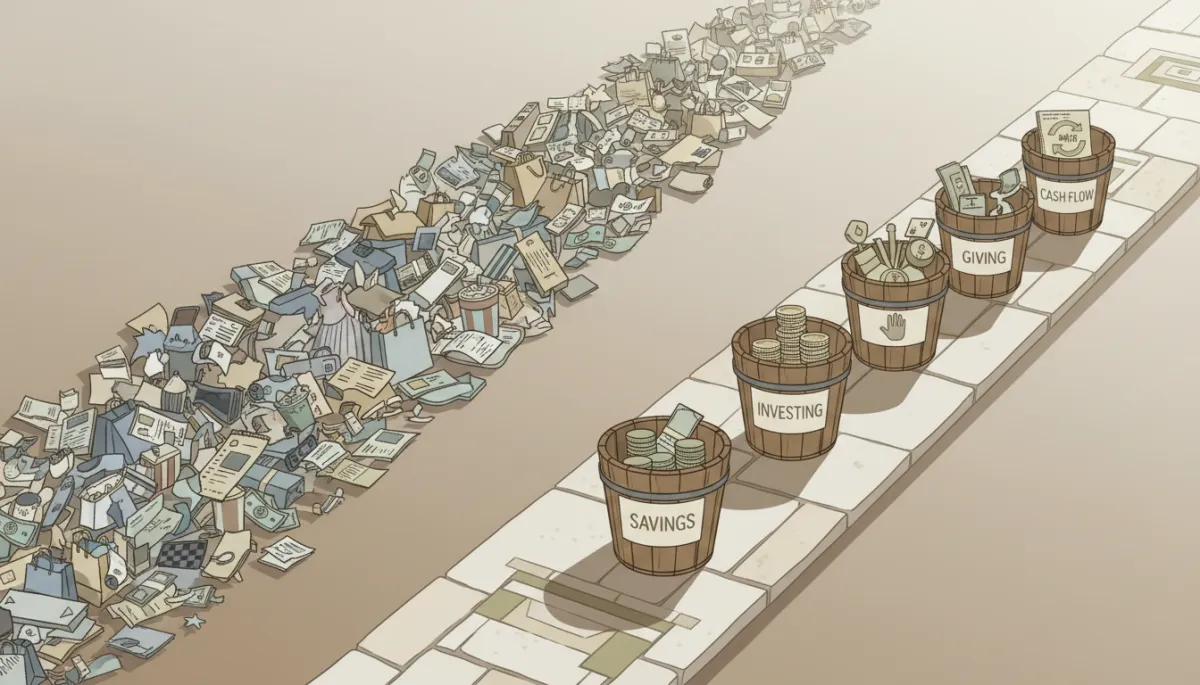
As income rises, existing systems determine whether money fuels stress or freedom.
This is why BDE Wealth focuses on systems over shortcuts. Your beliefs about money, your daily habits, and your financial structures matter far more than a single “perfect” investment. You don’t need to predict every market move. You need to build a way of thinking and operating that can handle whatever comes.
True Financial Independence: A Byproduct of Value, Cash Flow, and Purposeful Design
Many people define “financial independence” as hitting a certain number in an account and then never working again. That picture often leads to burnout today in the name of escape tomorrow. At BDE Wealth, we see financial independence differently. It’s not just a finish line; it’s a byproduct of how you live, create value, and structure your finances over time.
1. Creating Value Instead of Chasing Quick Wins
Sustainable wealth follows value. When you focus on solving real problems, serving people well, and improving your skills, you become more valuable in the marketplace. That might show up as higher income in your career, stronger profits in your business, or better opportunities in partnerships and investments. Value creation is the engine; money is the fuel it attracts.
2. Building Strong, Reliable Cash Flow
Cash flow is the lifeblood of your financial life. It’s not just what you earn, but what you keep and how consistently it shows up. You can have a large net worth on paper and still feel broke if nothing is actually flowing into your life each month. True independence comes when your cash flow is strong enough to support your lifestyle and your purpose, with margin to spare.
Strengthening income streams (career, business, real estate, royalties, or other assets)
Reducing leaks and inefficiencies (unnecessary subscriptions, high-interest debt, poor tax planning)
Directing surplus cash into assets that produce more cash flow over time
3. Eliminating Unnecessary Financial Drag
Financial drag is anything that quietly slows you down: high-interest debt, poor tax strategy, confusing fee structures, or even lifestyle choices that don’t match your values. You can be working hard, creating value, and still feel like you’re running in sand if drag is eating your progress. Part of intentional wealth design is identifying and reducing this drag so more of your effort actually shows up as results.
💡 Pro Tip: Ask yourself, “Where is money leaving my life without adding real value?” Then start with one area—debt, taxes, or lifestyle—and make a clear, simple plan to improve it.
4. Designing a Life Around Purpose, Not Just Retirement
The traditional model says: work hard for decades, sacrifice the best years of your life, then hopefully retire and finally enjoy yourself. That mindset often leads to people tolerating a life they don’t love today, in the name of a future that may or may not look the way they expect. It’s a recipe for disconnection and regret.
A purpose-driven approach asks different questions: “How can I design my work, money, and time so I’m living meaningfully now and later? How can wealth support the life I’m called to live, instead of becoming the only goal?” When you build your financial plan around purpose—around what matters most to you—independence stops being about escape and starts being about alignment.
Wealth as Freedom to Serve, Build, and Leave a Legacy
If wealth is just about stacking up possessions, it quickly feels hollow. The new car smell fades. The bigger house becomes normal. The excitement of the next purchase lasts a moment, then disappears. But when you see wealth as freedom to serve, build, and leave a legacy, everything changes. Money becomes a tool, not a trophy.
Freedom to serve: With margin in your finances, you can give more generously, support causes you care about, and show up for people who need you—without wondering if it will break your budget.
Freedom to build: You can invest time and resources into projects, businesses, or community efforts that might not pay off immediately but create long-term value for others.
Freedom to leave a legacy: Legacy is more than an inheritance. It’s the wisdom, systems, and values you pass on to the next generation. It’s teaching your children or loved ones how to think about money, not just handing them money and hoping they figure it out.
This is where the BDE Wealth philosophy of stewardship, sovereignty, structure, discernment, and legacy comes together. Stewardship asks, “How can I care well for what I have?” Sovereignty says, “I will not outsource my thinking or blindly follow trends.” Structure creates clear systems for saving, investing, protecting, and giving. Discernment helps you separate noise from truth. Legacy keeps you focused on impact beyond your own lifetime.
Owning Your Thinking: Practical Ways to Start Today
Owning your thinking might sound abstract, but it shows up in very practical ways. You don’t have to overhaul your entire life overnight. You can begin with small, steady shifts that compound over time—just like money does.
Notice your money stories. What did you grow up hearing about money? “Money is scarce.” “Rich people are greedy.” “If I make more, I’ll lose it.” Write these down. Ask yourself if they are actually true—or just familiar. Intentional thinking starts with awareness.
Ask better questions. Instead of “Can I afford this?” try “What trade-offs am I making if I choose this?” Instead of “What’s the hottest investment?” ask “What structure and education do I need before I invest?”
Create simple structures. Set up clear accounts for essentials, savings, investing, and giving. Automate what you can. The goal is not perfection; it’s clarity and consistency. Structure supports your thinking so you don’t rely on willpower alone.
Review regularly, without shame. Look at your numbers monthly. Celebrate what’s working. Notice what isn’t, and adjust. Shame keeps people stuck. Stewardship says, “I’m learning. I’m responsible. I can improve.”
Invest in your education. Financial independence is not a product you buy; it’s a skill set you build. Books, courses, and communities that teach stewardship, cash flow, and intentional design can save you years of confusion and costly mistakes.
From Confusion to Clarity: Designing Wealth with Intention
When you own your thinking, you stop living at the mercy of circumstances. You begin to see money as one part of a bigger picture that includes your time, relationships, health, and calling. You recognize that lasting wealth comes from aligning your thoughts, habits, and systems with the kind of life you actually want to live—and the kind of legacy you want to leave behind.
True wealth is not about escaping work forever. It’s about having the freedom to choose work that matters, to be present with the people you love, to give generously, and to build something that outlives you. That journey begins long before the numbers look impressive. It begins the moment you decide to take stewardship seriously and design your financial life on purpose.
Continue Your Journey of Stewardship and Sovereignty
If this perspective on wealth, stewardship, and intentional design resonates with you, you’re not alone. Many individuals, families, and business owners are tired of hype, fear-based advice, and one-size-fits-all financial “solutions.” They want clarity, education, and a community that values truth over trends and systems over shortcuts.
That’s why BDE Wealth created a space for people who want to think differently about money and legacy—who are ready to own their thinking, strengthen their structures, and design wealth that supports a life of purpose and impact. If you’re ready to keep learning and surround yourself with others on the same path, we invite you to take the next step in your financial education and legacy journey by joining the Sovereignty Circle™.